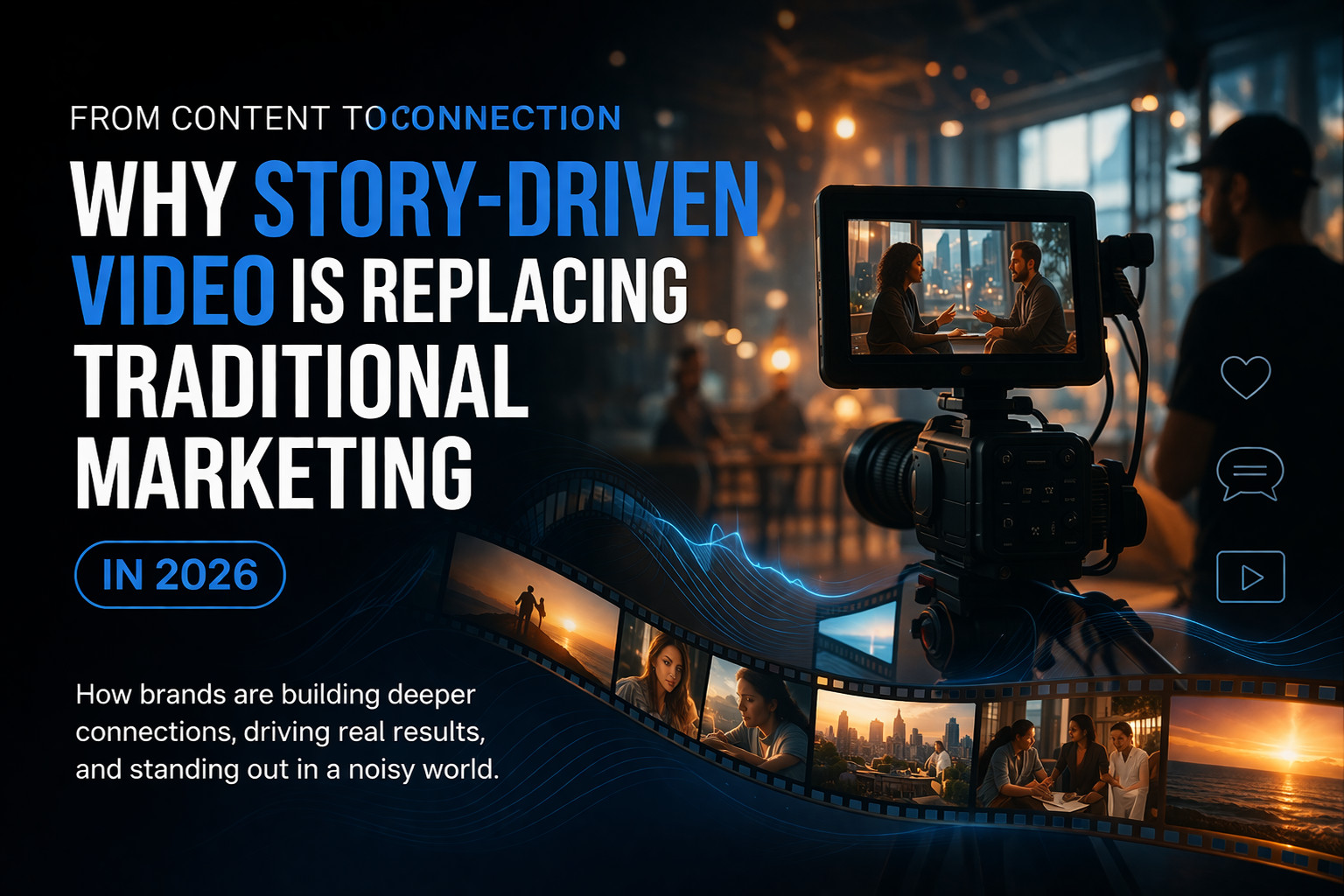
In 2026, brands are no longer competing on who produces the most content—they’re competing on who creates the strongest connection.
For years, marketing strategies revolved around volume: more posts, more videos, more campaigns. But audiences have changed. Attention is fragmented, expectations are higher, and people can spot a generic ad in seconds.
What’s working now is different. It’s not just about showing up—it’s about making people feel something.
The Shift Away from “Content for Content’s Sake”
There was a time when consistency alone could drive results. Posting frequently meant visibility, and visibility meant growth.
Today, that formula is breaking down.
Audiences are overwhelmed. Feeds are saturated. And most content is forgotten almost as quickly as it’s consumed.
The result? Brands that rely on high output but low depth are seeing diminishing returns.
Instead of asking “How much can we produce?”, the smarter question has become:
“What’s actually worth watching?”
Why Storytelling Is Winning
At its core, storytelling isn’t new—it’s human nature. What’s changed is how powerful it has become in a digital environment.
Story-driven video works because it:
- Creates emotional connection, not just awareness
- Builds trust through authenticity
- Keeps attention longer than promotional content
- Makes brands memorable
People don’t remember product features. They remember stories, moments, and emotions.
That’s why we’re seeing a rise in:
- Founder stories
- Behind-the-scenes content
- Customer journeys
- Documentary-style brand videos
These formats feel real—and that’s exactly why they work.
Short-Form Video, Deeper Impact
Short-form video isn’t going anywhere. In fact, it’s becoming even more dominant.
But there’s a misconception: short doesn’t mean shallow.
The most effective videos today manage to tell a complete story in under 60 seconds. They follow a simple but powerful structure:
- A strong hook in the first few seconds
- A relatable or intriguing moment
- A satisfying emotional or informational payoff
It’s not about making content faster—it’s about making it matter faster.
The Role of AI in Video Production
Artificial intelligence is transforming how content is produced. Editing is faster, variations are easier to create, and personalization is more scalable than ever.
But here’s the reality:
AI can enhance storytelling—but it can’t replace it.
The brands that stand out aren’t the ones using the most tools. They’re the ones using those tools to tell better, more human stories.
Technology speeds things up. Story gives it meaning.
From Campaigns to Content Ecosystems
Another major shift is how brands approach video strategy.
Instead of one-off campaigns, successful companies are building ongoing content ecosystems. Think:
- Recurring video series
- Episodic storytelling
- Consistent formats audiences recognize
This approach does two things:
- Builds familiarity and loyalty over time
- Reduces the pressure for every single video to “go viral”
It’s a long-term play—and it works.
What This Means for Brands in 2026
If there’s one takeaway, it’s this:
Video is no longer just a marketing tool—it’s a communication strategy.
To stay competitive, brands need to:
- Prioritize story before production
- Focus on authenticity over perfection
- Create content that reflects real people and real experiences
- Think in series, not just standalone videos
- Invest in creative direction, not just execution
The question is no longer “Should we create video?”
It’s “What story are we telling—and why should anyone care?”
The future of video marketing isn’t about more content. It’s about better content—content that connects, resonates, and stays with people long after they’ve watched it.
Because at the end of the day, audiences don’t follow brands.
They follow stories.
Comments are closed